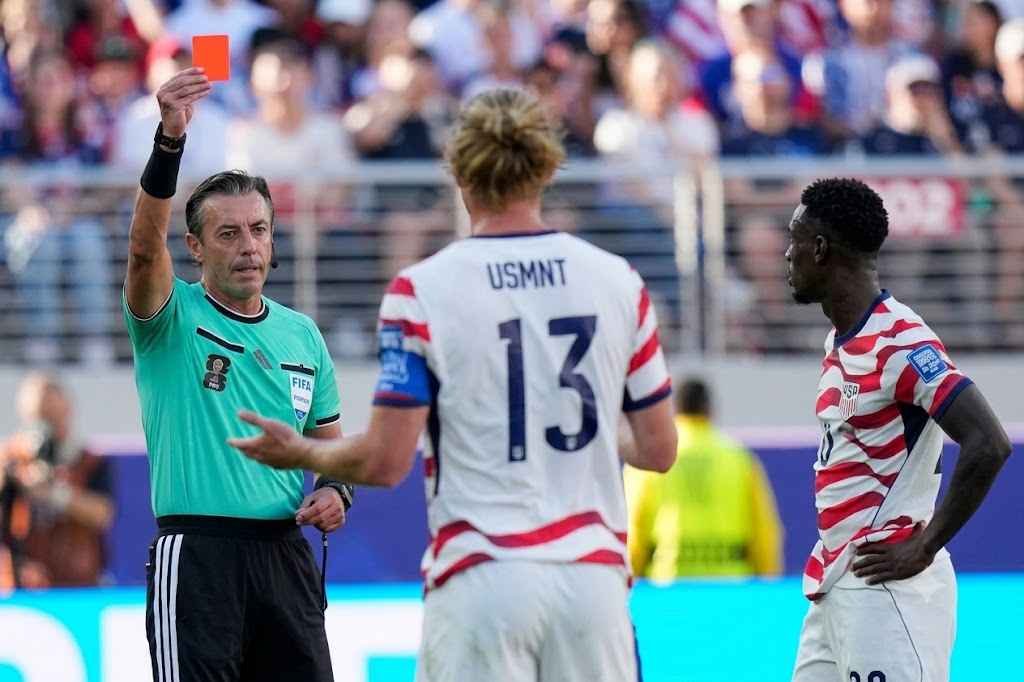
A decision involving red-card reversal has become the subject of increased scrutiny after reports that a World Cup betting watchdog flagged the incident for review. The development has caused conversations in the football world about being open, how referees do their job, and why it’s important to keep international games fair.
Even though a group that checks betting didn’t find any problems, these checks are usual when there’s strange betting or big events in a game that people are paying attention to.
What Happened?
In a recent game with the United States national team, Folarin Balogun was first given a red card because of a disagreement on the field.
After a closer look by the competition‘s officials, the red card was taken back, so Balogun can now play in upcoming matches.
Even though getting a red card reversed is part of football rules, the big attention this incident got made it a focus for groups that watch betting activity.
Sports betting integrity organizations routinely monitor:
- Suspicious betting patterns.
- Unusual market movements.
- High-profile officiating decisions.
- Match events that significantly affect betting outcomes.
The reported review does not automatically imply match-fixing, corruption, or misconduct by players, referees, or officials.
Instead, betting watchdogs often examine significant incidents to determine whether any irregular betting activity occurred before or during a match.
How Betting Watchdogs Work
International betting integrity organizations use advanced monitoring systems that track wagering activity across licensed betting operators worldwide.
They look for:
- Unexpected spikes in betting volume.
- Large wagers placed shortly before key events.
- Odds movements inconsistent with normal market behavior.
- Betting activity that differs significantly across regions.
If unusual patterns are detected, additional reviews may be conducted in cooperation with football governing bodies and law enforcement agencies when necessary.
Importance of Sporting Integrity
Football’s governing organizations place significant emphasis on maintaining public confidence in the fairness of competitions.
Integrity programs are designed to:
- Prevent match manipulation.
- Detect suspicious betting activity.
- Educate players and officials.
- Protect fans and legitimate betting markets.
- Preserve the credibility of international tournaments.
Regular monitoring has become a standard part of modern professional sports.
What Does a Red-Card Reversal Mean?
A red-card reversal occurs when disciplinary authorities determine that the original decision should be overturned after reviewing available evidence.
Such reviews may include:
- Video footage.
- Referee reports.
- Additional disciplinary evidence.
- Applicable competition rules.
Reversals are intended to ensure that disciplinary decisions remain fair and consistent.
Impact on the United States Team

Balogun’s availability could provide an important boost for the United States, particularly during major international tournaments where squad depth and attacking options play a crucial role.
As one of the team’s key forwards, his participation may strengthen the U.S. attack in upcoming matches.
Read more: FIFA boss Gianni Infantino’s
FIFA and Betting Integrity
Major international football competitions work closely with betting-monitoring organizations to identify potential integrity risks.
These partnerships focus on:
- Monitoring betting markets.
- Investigating suspicious activity.
- Sharing information with national football associations.
- Protecting competition integrity.
- Supporting fair play initiatives.
Such cooperation has become increasingly important as global sports betting continues to expand.
Expert Perspective
Sports governance experts note that reviews conducted by betting watchdogs are often precautionary.
Most flagged incidents do not result in findings of misconduct. Instead, they help ensure that football authorities can investigate unusual situations when necessary and maintain confidence in the sport.
Transparency throughout the review process remains essential for preserving trust among players, clubs, supporters, and commercial partners.
What Happens Next?
If betting-monitoring organizations identify no suspicious wagering activity, the review typically concludes without further action.
However, if unusual betting patterns are discovered, the information may be shared with the relevant football authorities for additional examination.
At this stage, a flagged review alone should not be interpreted as evidence of wrongdoing.
Conclusion
The reported review of Folarin Balogun’s red-card reversal demonstrates the increasing role that betting integrity monitoring plays in modern football. While the incident has attracted widespread attention, routine reviews are designed to safeguard the integrity of international competitions rather than suggest misconduct.
As football continues to grow globally, cooperation between governing bodies, integrity organizations, and betting regulators will remain an important part of protecting the sport and maintaining public confidence.
Frequently Asked Questions
1. Why was Folarin Balogun’s red-card reversal reviewed?
Reports indicate that a betting integrity organization flagged the incident for review as part of its routine monitoring of significant match events.
2. Does a flagged review mean someone did something wrong?
No. A review or flag does not indicate guilt or wrongdoing. It simply means the incident is being examined for any unusual betting activity.
3. What is a betting watchdog?
A betting watchdog is an organization that monitors sports betting markets for suspicious patterns that could threaten the integrity of competitions.
4. Can a red card be overturned?
Yes. Competition disciplinary committees may overturn a red card after reviewing video evidence, referee reports, and applicable regulations.
5. Why is betting integrity important in football?
Betting integrity helps protect fair competition, maintain public confidence, and prevent match manipulation or corruption.
