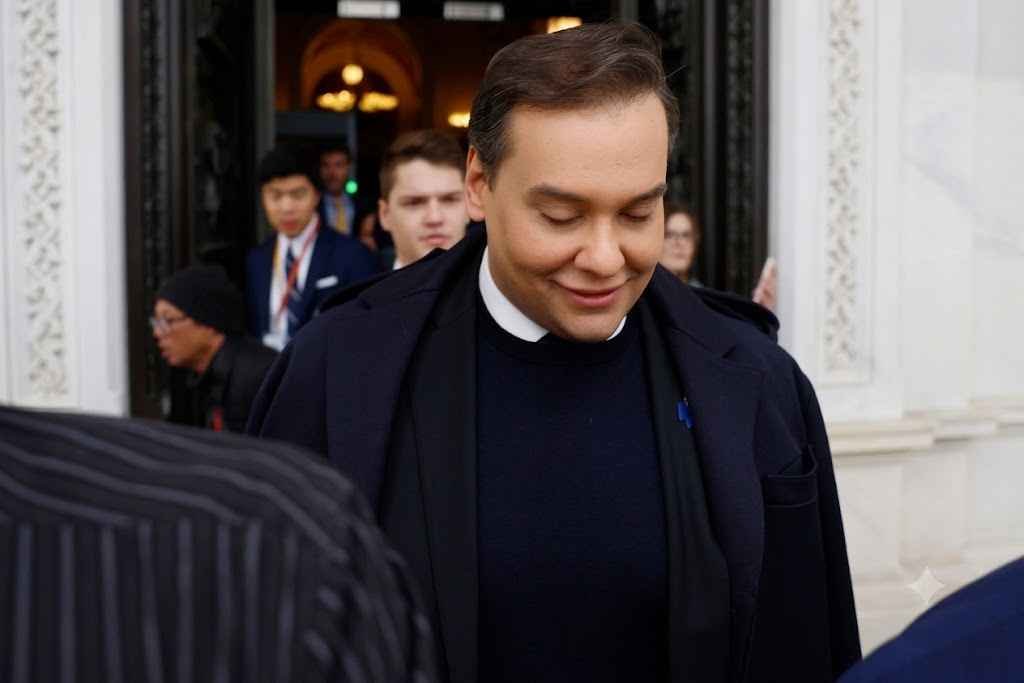
Former U.S. Rep. George Santos has agreed to pay $35,000 to settle a federal investigation into his trading activity on the prediction-market platform Kalshi, ending a probe centered on bets about whether he would attend President Donald Trump’s 2026 State of the Union address.
The Commodity Futures Trading Commission (CFTC) announced that Santos participated in illegal trading concerning the event contract. The regulator indicated that Santos profited over $17,000 from these trades and will relinquish those earnings as part of the settlement. Additionally, he is required to pay a civil penalty of $17,500 and will be subjected to a three-year prohibition from trading on prediction markets.
What Happened With the Kalshi Bets?
The controversy emerged prior to Trump’s State of the Union address on February 24. Santos openly stated his intention to be present at the speech and even shared his anticipated attendance in the House gallery.
Simultaneously, however, Santos engaged in trades on Kalshi, forecasting that he would not be present at the event, as revealed by the findings of the CFTC.
Ultimately, Santos did not attend the address. He later claimed that travel issues hindered his arrival, while the odds in the Kalshi market fluctuated significantly as news of his absence became known.
The regulator determined that Santos’ trading actions constituted manipulative behavior, as his public declarations regarding his attendance influenced the market while he maintained positions related to the contrary outcome.
Santos Does Not Admit Wrongdoing
While Santos consented to the financial settlement, he did not concede to any wrongdoing.
His lawyer stated that Santos opted to settle the issue instead of entering into a protracted and costly legal battle. Consequently, the settlement concludes the CFTC investigation without Santos admitting to having deliberately manipulated the prediction market.
This distinction holds significance as Santos has consistently asserted that he initially planned to attend the State of the Union but was prevented from doing so due to travel disruptions.
How Much Will Santos Pay?
The $35,000 settlement is made up of two primary components:
- About $17,570 — repayment of trading profits identified by regulators.
- $17,500 — civil monetary penalty imposed by the CFTC.
- Three-year trading restriction — Santos is prohibited from trading on prediction markets covered by the order during the ban.
The CFTC’s action highlights the growing regulatory attention being directed toward prediction markets, particularly contracts involving political events where participants may have access to information unavailable to ordinary traders.
Kalshi Flagged the Trading Activity
Kalshi detected Santos’ trades and referred the matter to federal authorities. The platform has said it intends to pursue additional enforcement measures and seek compensation for traders affected by the activity.
The case has attracted attention because prediction markets depend heavily on information and public statements. When a person who is directly involved in an event trades on a contract tied to that event, regulators may examine whether the trader used private knowledge or public influence to obtain an unfair advantage.
The Santos case could therefore become an important example of how regulators approach market manipulation in the rapidly expanding prediction-market industry.
A New Regulatory Challenge for Prediction Markets
Prediction markets such as Kalshi have grown significantly as Americans increasingly use event contracts to speculate on politics, economics, sports and other outcomes.
The Santos case demonstrates one of the challenges facing the industry: determining when trading represents legitimate speculation and when a participant’s personal involvement gives them an unfair advantage.
Federal regulators are paying increasing attention to these markets as their popularity grows. The CFTC’s action sends a message that participants may face penalties when their trading or public communications are found to manipulate an event contract.
Santos’ Troubled Political History
The latest controversy adds another chapter to Santos’ already controversial political career.
The former New York Republican congressman was expelled from the House in 2023 after a series of scandals involving false claims about his background and finances. He later pleaded guilty to federal fraud charges and received a prison sentence.
President Trump later granted Santos clemency, allowing him to leave prison after serving part of his sentence.
Now, the former congressman faces a three-year restriction from prediction-market trading following the CFTC settlement.
What the Case Means for Kalshi Traders
The settlement could serve as a warning to other prediction-market participants, especially people who have direct knowledge of the events being traded.
Prediction markets can move rapidly when new information becomes public. Traders who can influence that information—or who have private knowledge about an outcome—may face significant regulatory scrutiny.
For Kalshi and its competitors, the case also reinforces the importance of monitoring suspicious trading activity and maintaining safeguards against manipulation.
Bottom Line
George Santos has consented to pay $35,000 and accept a three-year ban on trading to settle the CFTC’s investigation into his bets on Kalshi related to the 2026 State of the Union.
Although Santos did not acknowledge any wrongdoing, regulators found that his trading practices breached federal regulations and resulted in profits exceeding $17,000. This case underscores the increasing regulatory challenges associated with political prediction markets and illustrates that both public declarations and trading actions may be examined when they seem to affect market results.
As prediction markets continue to grow, the settlement involving Santos may serve as a crucial reference point for regulators in distinguishing between standard trading practices and market manipulation.
