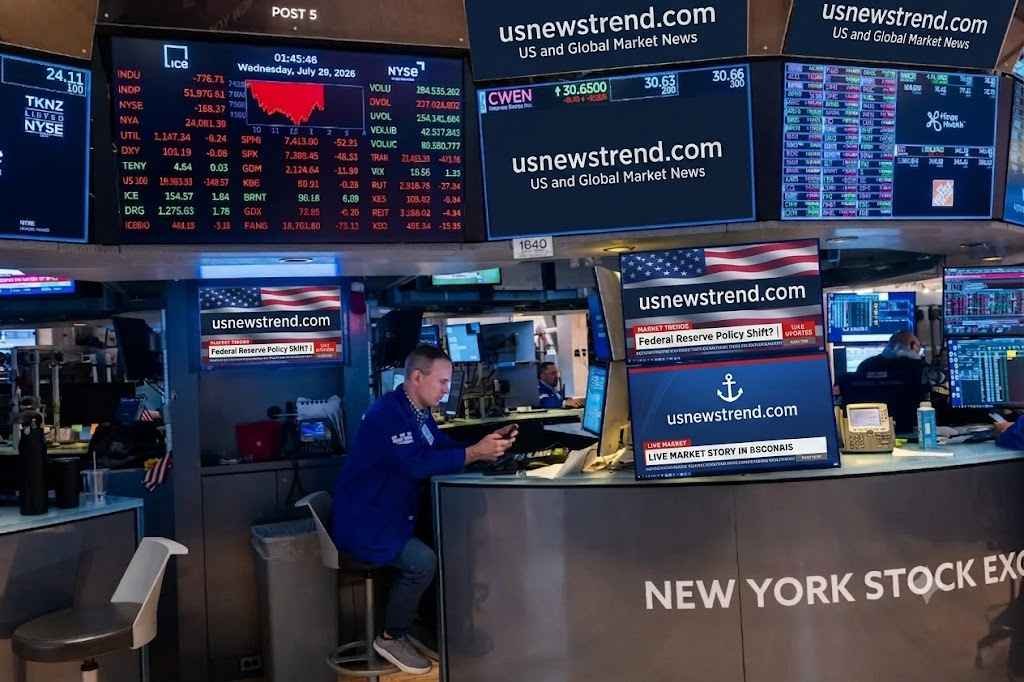
The U.S. stock markets regained some of their lost ground after a big drop that happened because of the Federal Reserve’s recent decision. Investors started buying stocks again as worries about interest rates began to ease. Many people in the market are wondering if Kevin Warsh, a former Federal Reserve Governor, would back more rate increases if he ever became a leader at the central bank.
The market‘s recovery came after a period of selling that followed the Fed’s cautious remarks about inflation and their plans for monetary policy.
Why Markets Sold Off
Stocks declined sharply after the Federal Reserve signaled that while interest rates remain unchanged for now, policymakers continue to monitor inflation closely.
Investors worried that:
- Inflation could remain above the Fed’s target.
- Interest rates may stay elevated longer.
- Borrowing costs could weigh on economic growth.
- Corporate earnings could face additional pressure.
Higher interest rates generally reduce the appeal of risk assets such as stocks because they increase financing costs for businesses and consumers.
Why Stocks Rebounded
Despite the initial decline, investors began buying shares as markets reassessed the outlook.
Several factors supported the rebound:
- Expectations that inflation may continue to moderate.
- Strong corporate earnings from several major companies.
- Continued resilience in the U.S. labor market.
- Belief that the Fed may avoid unnecessary tightening.
- Bargain buying after the market decline.
The recovery suggested investors remain optimistic about the long-term outlook despite short-term uncertainty.
Focus Turns to Kevin Warsh
People have also started looking at Kevin Warsh, a former Federal Reserve Governor, who has been talked about before when discussing who might lead the U.S.central bank in the future.
Some investors are wondering if Warsh would take a stronger stance against inflation by pushing for more interest rate hikes.
However, others think that whoever takes the leadership role at the Fed will still rely on new economic data rather than sticking to a set plan.
So far, there’s no official word that Warsh would change the monetary policy right away if he were to take on a leadership position.
Impact on Major Stock Indexes
The rebound was seen across major U.S. indexes, including:
- S&P 500
- Dow Jones Industrial Average
- Nasdaq Composite
Technology shares, financial companies, and consumer discretionary stocks helped lead the recovery after experiencing significant losses during the previous session.
Investors also shifted attention back to company earnings and economic fundamentals rather than focusing solely on interest-rate speculation.
Treasury Yields and Bond Market
The bond market remained an important driver of investor sentiment.
Treasury yields fluctuated as traders evaluated:
- Future inflation expectations.
- Federal Reserve policy.
- Employment data.
- Economic growth.
- Consumer spending.
Lower bond yields often provide support for stock valuations, particularly among technology and growth companies.
What Investors Are Watching Next
Market participants will continue monitoring several key economic indicators:
- Inflation reports.
- Employment data.
- Consumer spending.
- GDP growth.
- Corporate earnings.
- Federal Reserve speeches.
- Treasury yield movements.
These reports could influence expectations for future monetary policy and market direction.
Analyst Perspective
Many analysts believe markets are likely to remain volatile until investors gain greater clarity on the Federal Reserve’s next policy decisions.
Key themes include:
- Inflation trends.
- Economic resilience.
- Interest-rate expectations.
- Corporate profitability.
- Global geopolitical developments.
Long-term investors often focus on company fundamentals rather than reacting to short-term market swings.
What This Means for Investors
Periods of market volatility are common when investors reassess interest-rate expectations.
Financial experts generally recommend:
- Maintaining a diversified portfolio.
- Avoiding emotional investment decisions.
- Monitoring long-term financial goals.
- Reviewing portfolio allocations regularly.
- Staying informed about economic developments.
While short-term fluctuations may continue, many investors remain focused on long-term market performance.
Conclusion
U.S. stocks bounced back from a big drop caused by the Federal Reserve, as investors thought again about whether interest rates might go up again and discussed how Kevin Warsh being in a leadership role might affect monetary policy. Even though there’s still a lot of uncertainty about inflation and interest rates, the market‘s recovery shows that investors still think the U.S. economy and company profits can help stocks do well in the long run.
